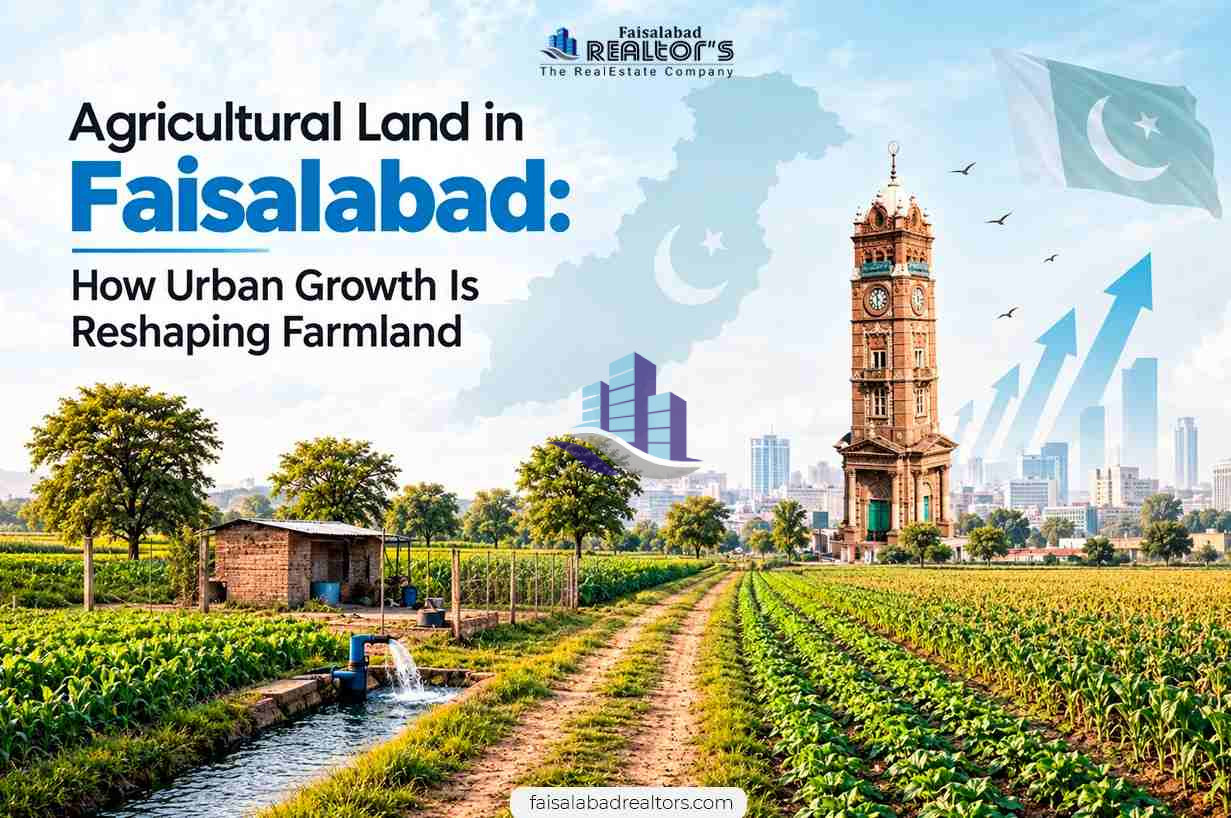
Agricultural Land in Faisalabad: How Urban Growth Is Reshaping Farmland
Faisalabad has always been known for two things. The one is its strong farms, and the second one is the textile trade. Together, they helped build the city into what it is today. But over the last few years, something has been shifting. Agricultural land in Faisalabad is slowly turning into housing societies and commercial plots. This guide breaks down why this is happening and what it means for farmers, buyers, and investors. So if you want to know a complete overview of this topic, stay connected with Faisalabad Realtors.
Why Faisalabad Is Expanding Beyond Its Urban Areas
Faisalabad's old city area is full. There is simply no more space left inside it. New homes and businesses need land. Roads need space to connect everything. So the city keeps spreading outward, into the agricultural lands on its edges. This kind of growth happens in most cities as they get bigger. But in Faisalabad, a strong local economy is pushing this growth along even faster.
Key Reasons Behind Urbanisation and Farming Changes
A few forces are pushing this shift. Population growth is the main one, as more families need housing each year. Faisalabad's textile industry adds to this, since new factories need land and worker housing nearby. Better roads to other cities have also opened up outer areas for development. Together, these forces keep the pull between urbanisation and farming moving forward.
How Housing Societies Are Affecting Agricultural Land
The Private housing societies are a major reason farmland is disappearing here. Developers buy large farm plots. They divide them into smaller residential blocks and sell them off. This can happen fast once a scheme gets approval. It brings modern housing to the area. But it also means fields that once grew wheat or cotton are gone for good. Farmland rarely returns once it's built on.
Changing Land Prices and Investment Opportunities
As farmland shifts to housing, prices in these areas tend to rise. Land once valued only for its crop yield can jump in price near a new scheme or main road. This creates a window for investors. Buying farmland early, before a housing project reaches it, often costs far less than buying already-developed plots nearby.
What Urban Growth Means for Local Farmers
For the farmers who own this land, the situation is mixed. Selling to a developer can bring in far more money than years of farming ever could. But it also means giving up a livelihood, and for many families, a way of life passed down for generations. Some farmers choose a middle path. They sell part of their land and keep farming the rest. This balances short-term cash with long-term stability.
Pros and Cons of Buying Agricultural Land
Before buying farmland near Faisalabad, it helps to weigh both sides.
Pros | Cons |
Lower prices compared to developed plots | Land may still need approval for non-farm use |
Strong potential for future value growth | Selling or converting the land can take time |
Option to keep farming while land value rises | Access to roads and utilities may be limited |
Good for long-term investment plans | Requires patience, as growth does not happen overnight |
Future Outlook for Agricultural Land in Faisalabad
Faisalabad's growth is expected to continue in the coming years. Its farmland will likely keep shrinking along with it. Areas near main roads and existing housing schemes will probably see the fastest change. Some farming will remain further out, especially where canal access supports strong crop yields. So both housing and farming are likely to keep existing side by side, just with shifting boundaries between them.
Things to Check Before Buying Agricultural Land
Buying farmland is not the same as buying a ready-made house, so a few extra checks matter here.
- Confirm the land's legal ownership and title documents
- Check if the land is approved for future housing or commercial use
- Look into road access and distance from the main city
- Ask about canal or water rights if farming will continue
- Verify there are no ongoing legal disputes on the property
Conclusion
Faisalabad is growing fast, and its farmland is changing along with it. This shift brings both challenges and chances. Farmers, buyers, and investors all have something to gain if they understand what is happening and how to take the next steps. Thinking about agricultural land in Faisalabad ? Reach out to us for guidance, and keep visiting Faisalabad Realtors for more property insights.
If you're interested in any other property sale or purchase in Faisalabad, do contact us . We provide the best real estate services in Faisalabad.
Contact us for:
- House for sale in Faisalabad
- Room for sale in Faisalabad
- Flat for Rent in Faisalabad
- Factories for sale in Faisalabad
- Plots for sale in Faisalabad
- Agriculture land for sale in Faisalabad
- Ideal farmhouse for sale in Faisalabad
- Residential properties for sale in Faisalabad
- Commercial properties for sale in Faisalabad