NAB to End File System in Pakistan, Property Market, and Its Impact
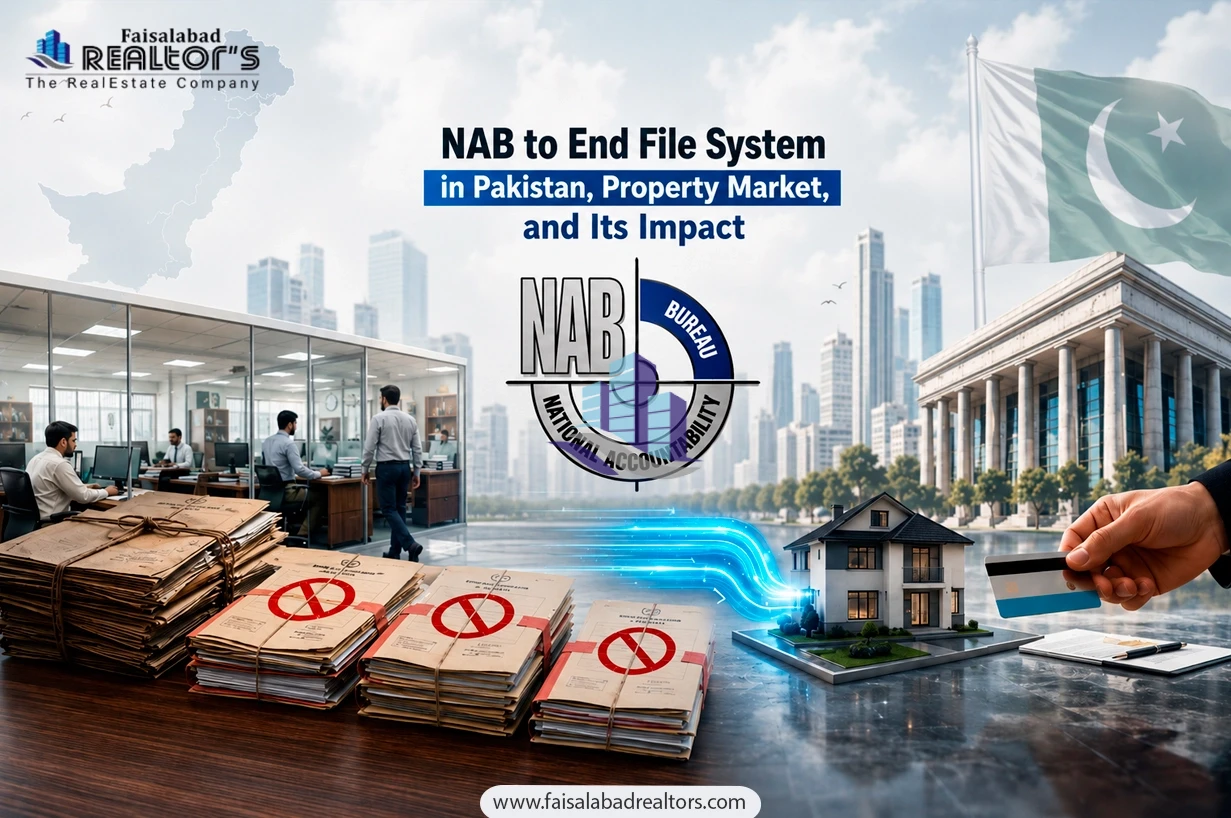
If you've been following Pakistan's property market, you've probably heard the recent discussions about NAB's proposed move to end the traditional file system. It's a topic that has quickly become the center of attention for investors, developers, and people planning to buy property.
For some, this news has raised concerns about future investments. Others believe it could finally bring more transparency to the real estate sector. While the proposed changes are still part of a broader reform process, one thing is clear—the way people invest in property could gradually change in the coming years.
Let's understand what the file system is, why it's under discussion, and what these changes could mean for buyers and investors.
What Is the Property File System?
A property file is not the same as owning a plot. It is simply a document that gives the buyer the right to receive a plot once a housing society completes its development and officially allocates plots.
This model became popular because it allowed developers to raise funds during the early stages of a project. At the same time, investors could buy files at lower prices and sell them later if demand increased.
Many successful housing societies have used this approach over the years, and thousands of people have earned good returns through file trading. However, the system also created opportunities for misuse.
In several cases, files were sold before the developer had complete legal approvals or even sufficient land for the project. Some schemes experienced years of delays, while others never reached completion, leaving buyers waiting with no clear timeline.
Why Is NAB Looking at the File System?
The main objective behind the proposed reforms is to make Pakistan's property market safer and more transparent.
Over the years, complaints related to fake housing schemes, delayed possession, and fraudulent file sales have become increasingly common. Many buyers invested their life savings in projects that failed to deliver what was promised.
By introducing stricter rules, the authorities aim to discourage the sale of paper-based investments that are not backed by proper land ownership or legal approvals. The focus is expected to shift towards projects that are genuine, documented, and ready for development.
If implemented effectively, these reforms could help reduce fraud and improve confidence in the real estate sector.
What Could Change for the Property Market?
As is usually the case when major regulations are implemented, markets take some time to adapt; this holds true in Pakistan's property sector too.
Investors primarily focused on purchasing and selling files may become more circumspect until all the rules become clear, which may temporarily reduce activity in some housing societies, particularly those still in the development stages.
On the other hand, projects with approved land, visible development, and proper documentation tend to receive greater interest from buyers. People tend to feel more at ease investing when they can see tangible progress rather than depending on vague promises for returns in the future.
At times, transitioning to an organized market can take time; however, its results often offer better opportunities for long-term investment.
Is This Good News for Buyers?
Genuine buyers could benefit from these proposed changes. Imagine a family that has saved for several years to purchase their dream residential plot; their priority should not be making quick profits but instead to feel assured that the project is legitimate and they will take possession as promised.
By ensuring developers complete legal requirements prior to selling property , buyers will gain more peace of mind when making such an important financial decision.
Though no risk can ever be eliminated entirely, enhanced oversight can definitely reduce the chances of investing in untrustworthy projects.
What About Investors?
Investment opportunities will shift gradually as the investment landscape evolves, yet that doesn't mean opportunities have gone away completely. Instead of solely relying on short-term gains through file trading, investors should instead shift focus toward projects with strong legal foundations, active development plans and long-term growth potential.
Experienced investors understand the value of investing in quality projects over speculation alone, with research becoming even more essential as markets become more regulated.
As part of an investor's due diligence, verifying legal approvals, visiting the site, reviewing developer experience, and understanding project status must always be part of the investment process.
Investment Reformed
No matter when these reforms take effect, one key lesson stands out: never invest solely based on market speculation or promises of quick profits.
Before purchasing any property, be sure to investigate its developer, check its legal approvals, comprehend its payment plan, and visit the location as much as possible. These steps may help avoid expensive missteps.
Utilizing the services of an experienced real estate consultant can make the entire investment process simpler, especially if this is your first venture into real estate investment .
Final Thoughts
NAB's decision to end its traditional file system has started an important dialogue about Pakistan's real estate market and its future. While proposed reforms may cause short-term uncertainty, they also hold great potential to make property transactions more transparent and reliable for all involved.
As with any major policy change, this could provide buyers with greater protection, while investors could see projects built to real development instead of speculation. As with any change to the market, however, informed decisions will always remain the key to successful property investment.
At Faisalabad Realtors, we believe every property decision should be based on facts, careful planning, and reliable guidance. No matter if it's buying your first plot or investing for future opportunities, our team is here to guide you towards confident yet well-informed choices in an ever-evolving real estate market.
If you're interested in any other property sale or purchase in Faisalabad, do contact us. We provide the best real estate services in Faisalabad.
Contact us for:
- House for sale in Faisalabad
- Room for sale in Faisalabad
- Flat for Rent in Faisalabad
- Factories for sale in Faisalabad
- Plots for sale in Faisalabad
- Agriculture land for sale in Faisalabad
- Ideal farmhouse for sale in Faisalabad
- Residential properties for sale in Faisalabad
- Commercial properties for sale in Faisalabad