Pakistan's 2026-27 Federal Budget: A Simple Guide
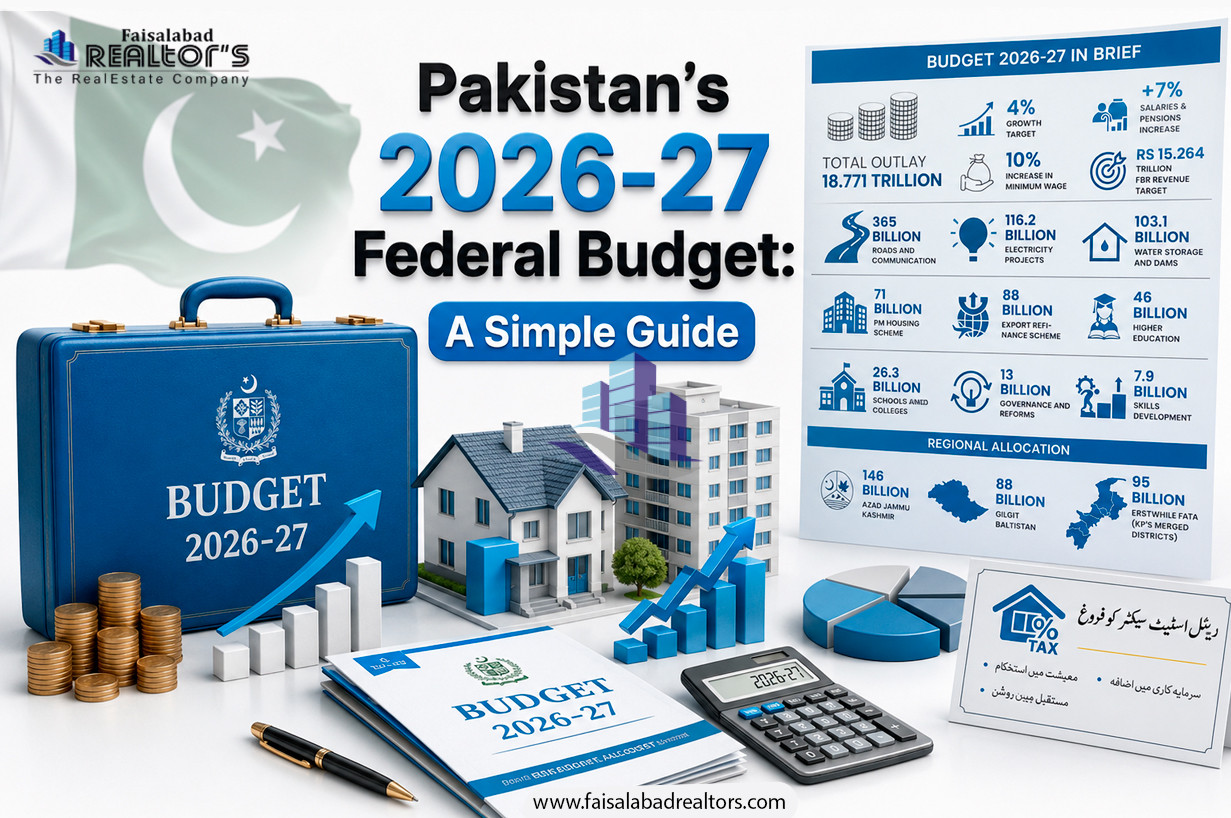
The Federal Government of Pakistan has introduced its national budget for the Fiscal Year 2026-27. The total amount of money the government plans to spend (the total outlay) is Rs 18.8 trillion.
The main goals of this new budget are to help the economy grow by 4% and to bring down the average inflation rate to 8.2% so that daily items become more affordable. To do this, the government has changed tax rules, cut spending in some departments, and given more money to others.
Department and Sector Allocations: Where is the Money Going?
To understand where the country's money is being spent, this table shows the exact budget amounts for major departments and how much they changed (increased or decreased) compared to last year:
Sector / Government Department | New Budget Amount | Change from Last Year (Variance) | Simple Explanation |
Debt Servicing (Paying off old loans) | Rs 8,054 billion | -1.86% Decrease | The single biggest expense; it dropped slightly due to loan restructuring. |
Defense Services (Military) | Rs 3,000 billion | +17.63% Increase | Increased to handle regional security and upgrade military equipment. |
Pensions (For retired government staff) | Rs 1,169 billion | +11.02% Increase | Added more funds to cover a new 7% pension increase for retired workers. |
Subsidies and Relief (Electricity and utility discounts) | Rs 1,091 billion | -8.01% Decrease | Cut down in line with international reforms to stop general electricity discounts. |
Civil Administration (Running official ministries) | Rs 1,071 billion | +10.30% Increase | Higher spending needed to run offices due to general inflation and costs. |
BISP (Benazir Income Support Programme) | Rs 838 billion | +17.04% Increase | Increased to provide financial cash help to 12 million poor families. |
Education Services | Rs 117.7 billion | +4.53% Increase | A small increase to support federal schools, colleges, and university grants. |
Food Security and Agriculture Research | Rs 4.18 billion | -1.65% Decrease | A minor cut focused on cutting extra expenses in agricultural offices. |
Information and Broadcasting | Rs 3.02 billion | -50.00% Decrease | Cut exactly in half to stop extra spending on government media and ads. |
PSDP (Development Projects) | Rs 1,000 billion | 0.00% (No Change) | Kept exactly the same as last year to focus entirely on finishing active roads and projects. |
How the Budget Impacts Key Business Sectors
Real Estate and Construction
The real estate market receives a major boost to encourage more buying and selling. For tax filers (people who legally register and file their income returns), the withholding tax on buying a property drops from 2.5% to 1.25%. The tax on selling a property drops from 5.5% to 2.75%. This major tax cut is expected to automatically help over 40 related industries, including cement, steel, bricks, and labor. Non-filers will not get this relief and will continue to pay much higher rates.
Information Technology (IT) and Freelancers
The low-tax system (called the Final Tax Regime) for IT companies and digital freelancers has been extended. The budget officially locks in this protection for 3 more years, keeping IT exports safe until 2030. Additionally, the government is starting a $1 billion National AI Ecosystem Development Programme to upgrade public records and systems using advanced digital cloud models.
Luxury Automobiles
To protect local markets and collect revenue from luxury buyers, the government has increased the Federal Excise Duty (FED) tax on imported luxury cars and large SUVs with engine sizes larger than 2000cc.
Daily Life, Relief, and Salaries
- Tax Relief for the Salaried Class: The extra income tax surcharge has been completely removed. People making between Rs 2.2 million and Rs 7 million a year will see their tax percentages reduced across the board, leaving them with more take-home salary.
- Salary and Wage Increases: Government employees get a 7% salary increase, while the legal minimum wage for laborers across federal territories has been raised by 10%.
- Cheaper Online and Foreign Shopping: The heavy 5% tax charged when you use your debit or credit cards for foreign websites, international streaming, or online shopping has been slashed to just 0.5%.
- Health and Hygiene Relief: To support public health, the government has completely removed the sales tax on essential health products, specifically feminine sanitary pads and contraceptives.
Categories
Recent posts