Raw Farmland vs Developed Farmland: Which One Should You Actually Buy?
Anyone who has looked into buying agricultural land around Faisalabad has probably run into this question at some point. Do you go for raw farmland, or is developed farmland the smarter move? It sounds like a small detail, but it actually changes everything about the deal, from the price you pay to how soon you can start using the land.
We deal with this question almost every week at Faisalabad Realtors, and honestly, most people are not confused about farmland itself. They are confused about these two terms and what they really mean for their money.
Raw Farmland, Explained Simply
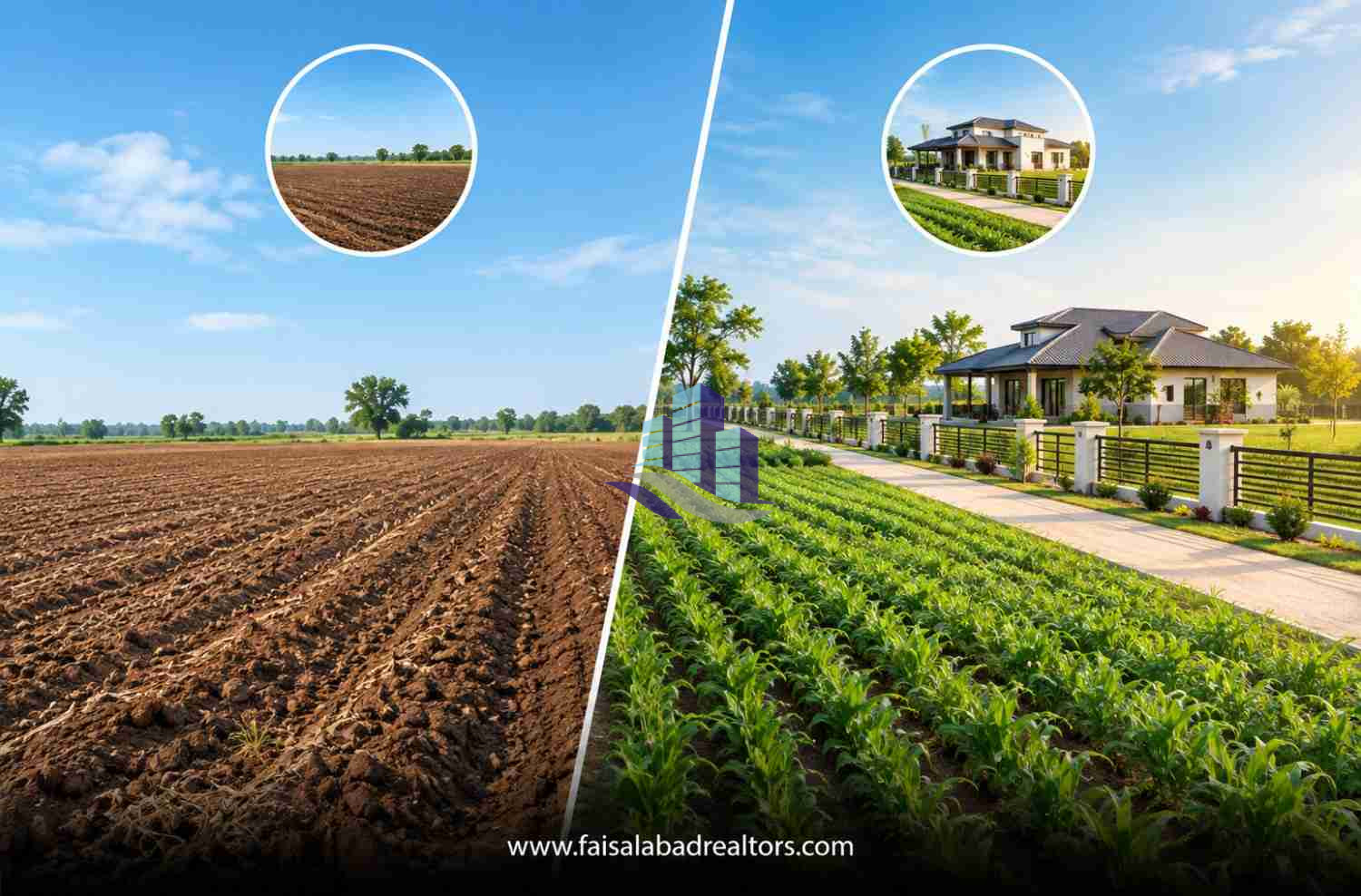
Raw farmland is land that hasn't been touched. No roads leading up to it, no boundary wall, no tube well, no electricity pole anywhere near it. It's just land the way it naturally is. Some people also call this undeveloped farmland, and that name fits pretty well.
When you buy raw farmland, you're not really buying convenience. You're buying possibility. What happens on that land later is entirely up to you.
What makes raw farmland attractive
The price is usually the first thing that draws people in. Since nothing has been built or set up, raw farmland costs a lot less per acre than land that already comes developed. That lower entry point makes it a popular choice for people looking at farmland investment without wanting to spend a huge amount upfront.
There's also the freedom factor. You get to decide where the wall goes, where to dig a well, whether you want to grow crops or plant an orchard, or even hold onto it for future construction. Nobody else's layout gets forced on you.
And then there's the long game. Land that looks empty today, especially land sitting near an expanding city like Faisalabad, often turns out to be worth a lot more once development starts creeping closer. Patience tends to pay off here.
What to watch out for
Of course, raw land isn't without its downsides. You'll need to put in work before it's actually usable, whether that's building access paths, arranging water, or getting the soil ready. None of that happens for free, and none of it happens overnight either.
This is also where people get burned if they skip due diligence. Before handing over any money, check the land records properly. Look at the fard, the intiqal, water rights, zoning status, all of it. Skipping this step is how people end up stuck with land they can't even use the way they planned.
Developed Farmland, Explained Simply
Developed farmland sits on the other end. This land already has the basics sorted out, internal roads, boundary fencing, some kind of irrigation or tube well, and often electricity too. Basically, someone already did the groundwork so you don't have to.
Why people prefer it
The obvious appeal is speed. You don't wait years for the land to become usable. You can start farming, building, or renting it out almost right away.
There's also a comfort in knowing what you're getting. The soil's already been worked with, the water setup is known, and the road access is already there. Nothing about it is a guessing game.
And if you ever plan to sell later, developed land tends to move faster. Buyers like not having to deal with setup work themselves.
What to be careful about
The trade off is obvious too, you pay more for all that convenience. There's also less room to make it your own since the layout was already decided by whoever developed it.
And this part matters a lot, who developed it actually makes a difference. A trustworthy developer means solid infrastructure and clean paperwork. A shady one can leave you dealing with drainage problems, weak soil, or ownership issues you didn't sign up for.
Raw Land vs Developed Land, Side by Side
Feature | Raw Farmland | Developed Farmland |
Starting cost | Lower | Higher |
Infrastructure | Not there yet | Already set up |
Time before you can use it | Longer | Right away |
How much control you have | A lot | Limited |
Risk involved | Higher | Lower |
How easy it is to resell | Depends where it is | Usually easier |
So Which One Actually Fits You?
It really comes down to what you want out of the investment and how long you're willing to wait.
If you're in it for the long haul and don't mind waiting several years to see real growth, raw farmland probably makes more sense. It also suits people who like having full say over how the land turns out and who can handle the extra costs that come later.
If you need the land to work for you right now, or you just don't want the uncertainty that comes with raw land, developed farmland is the safer bet. It's a better fit if you're looking at a shorter timeline with quicker, more predictable returns.
A Few Things Worth Checking Before You Buy in Faisalabad
Whatever you decide, a few things are worth doing regardless. Go through the land records carefully and make sure there are no disputes attached to the property . Check the water situation too, since a lot of farmland around Faisalabad relies on canal or tube well irrigation, so confirming water rights beforehand saves a lot of headache later.
Location matters more than people think. How close the land is to main roads or the city affects both how usable it is now and how much it'll be worth later if you sell.
If you're leaning toward undeveloped farmland, remember the purchase price is just the starting point. Leveling, fencing, and getting utilities connected all add up, so plan for that from the start rather than being surprised later.
And honestly, working with someone who actually knows the local land system helps more than people expect. There's a lot of paperwork involved in buying land here, and having someone familiar with local rates and revenue records can save you from mistakes that are expensive to fix.
Bottom Line
There's no version of this where one option is simply better than the other. Raw farmland rewards people who can be patient and think long term. Developed farmland rewards people who want speed and don't want to deal with uncertainty. Both are solid paths, depending on what you're actually trying to get out of your investment.
If you're weighing farmland investment options around Faisalabad, the team at Faisalabad Realtors can walk you through both raw and developed plots, help verify the paperwork, and point you toward land that actually fits what you're trying to do.
If you're interested in any other property sale or purchase in Faisalabad, do contact us . We provide the best real estate services in Faisalabad.
Contact us for:
- House for sale in Faisalabad
- Room for sale in Faisalabad
- Flat for Rent in Faisalabad
- Factories for sale in Faisalabad
- Plots for sale in Faisalabad
- Agriculture land for sale in Faisalabad
- Ideal farmhouse for sale in Faisalabad
- Residential properties for sale in Faisalabad
- Commercial properties for sale in Faisalabad