What is Industrial Real Estate in Pakistan? A Simple Guide for Investors
Ask most Pakistanis about real estate, and they will likely mention plots, houses, and shops along a bustling market road as desirable property types. Warehouses or factories rarely make an appearance in conversation, but in truth, they hold more economic clout than many of these other properties combined.
Industrial real estate is often undervalued, yet its significance to society cannot be overstated. So what exactly is industrial real estate, and why should investors put money in it? Let us discuss in more depth.
Understanding Industrial Real Estate
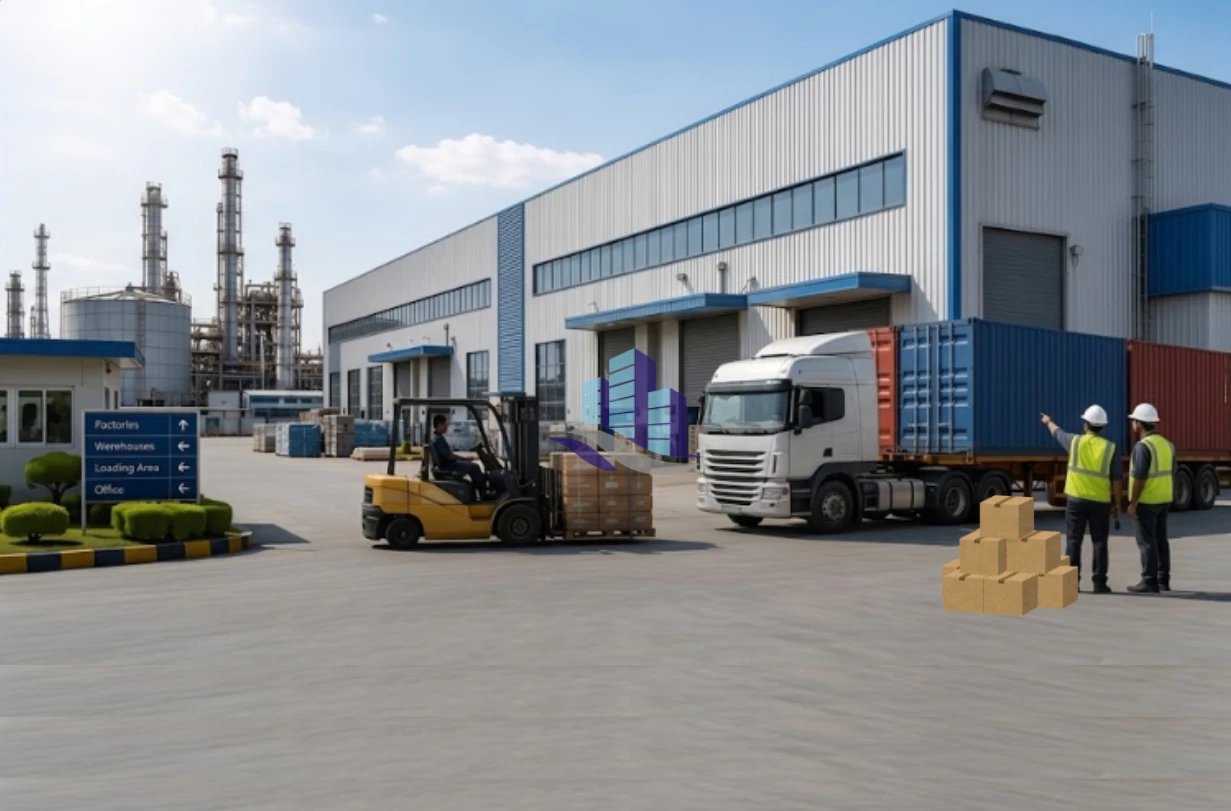
At its core, industrial real estate refers to any property used for producing, storing, researching, or transporting goods. Instead of serving as living spaces or shopping destinations for consumers, industrial real estate acts as a hub where the true economic engine runs.
None of these buildings look like a residential plot or a glass fronted office tower. They are built purely for function. High ceilings let forklifts stack goods several levels up. Loading docks allow trucks to come and go throughout the day. Heavy duty electrical systems keep machinery running smoothly. And you will almost always find them tucked into designated industrial zones, kept a comfortable distance from residential neighborhoods, partly out of practicality and partly because nobody wants a factory's noise next to their home.
Why It Actually Matters
It would be easy to dismiss industrial real estate as a niche corner of the market, but the truth is quite the opposite. This sector is one of the real backbones of Pakistan's economy, and its impact touches almost everything else.
Start with employment. Every factory or warehouse that gets built needs people to run it, from floor workers to logistics coordinators, which means industrial growth translates fairly directly into jobs. That same growth also attracts investors, since local and foreign businesses look for reliable industrial infrastructure before they commit to setting up operations anywhere. A country with strong, well organised industrial zones simply looks more attractive to do business in.
There is a trade angle too. Before goods can be exported, they usually need to be packaged, stored, and prepared somewhere, and industrial hubs are exactly where that happens. The stronger these hubs are, the smoother Pakistan's trade relationships tend to be. Building them out also has a ripple effect on the surrounding area, since new industrial estates are rarely built without upgrading nearby roads and utilities as well.
Then there is the money side of it. Taxes and fees collected from industrial properties feed back into public services like schools and road maintenance, so the government benefits directly too. And on a more everyday level, every time an online order shows up a couple of days after you place it, a warehouse or distribution center somewhere made that possible. Multiply that across the whole country and you start to see how central industrial real estate really is to supply chains functioning smoothly. It also makes the broader economy more resilient, since a country producing a wide range of goods is far less vulnerable to shocks than one leaning on a single sector.
Put it all together and it becomes clear why industrial real estate deserves more attention than it usually gets. It may be less visible than a new housing society launch, but it plays a much bigger role in keeping the economy healthy.
Where It Fits Within Commercial Real Estate
Industrial real estate is just one subcategory of commercial real estate , which also encompasses
- retail stores and malls
- office
- Parks
- coworking spaces
- business parks
- hospitality properties such as hotels
- resorts
- mixed use developments that combine
- retail office
- and residence
Industry stands apart from residential real estate properties for several key reasons. Their value stems not from customer attraction but from production capacity, storage space efficiency, and how efficiently goods move through them - meaning demand tends to follow manufacturing activity rather than foot traffic or shopping seasons; it offers a distinct rhythm to any portfolio that otherwise relies too heavily on retail or residential investments.
Is It Worth Investing In?
This is usually the question people actually care about, so it is worth answering honestly.
Industrial real estate tends to hold up well even when other sectors slow down, because businesses still need somewhere to store their inventory and run their operations regardless of the wider economic climate. That kind of steady demand is exactly what draws long term investors toward the sector. Pakistan's industrial base itself is expanding too, with textiles, pharmaceuticals, manufacturing, and technology all growing and needing physical space to operate from.
There are practical advantages as well. Business tenants tend to sign longer leases than residential ones, which means fewer vacancies and more predictable income for property owners. Rental income also tends to stay fairly steady since businesses depend on their operational space and are less likely to move frequently. And in well connected industrial zones, property values often climb over time as demand keeps outpacing available supply.
None of this means the investment is risk free, though. Location, tenant reliability, lease terms, and the physical condition of the property all still play a role in how well an industrial investment performs. Proper research matters here just as much as it does with any other kind of property purchase.
Why Faisalabad Stands Out
If there is one city where industrial real estate is practically woven into the local identity, it is Faisalabad. Long known as Pakistan's textile hub, the city has built its economy around manufacturing and trade for decades, and that history gives investors a genuine head start today.
Faisalabad's established industrial areas, steadily improving infrastructure, and strong transport links to other major cities make it one of the more practical places in the country to consider industrial or commercial property right now. The demand is already there. It really comes down to finding the right property at the right time.
The Bottom Line
Industrial real estate may not make headlines like new residential projects do, but its contributions can be just as crucial to job creation, exports, and infrastructure strengthening - not to mention supply chains moving along smoothly. Industrial properties offer steady demand with long lease agreements tethered directly to economic development in their local community. For investors willing to look beyond residential options alone, industrial investments provide steady returns, increased economic development potential, and long-term lease contracts that provide direct exposure.
Are you exploring industrial and commercial property options in Faisalabad? Faisalabad realtors can guide you through current listings, evaluate locations, and help you find an investment that truly satisfies your goals. Reach out now - and let's find your perfect property together.
If you're interested in any other property sale or purchase in Faisalabad, do contact us. We provide the best real estate services in Faisalabad.
Contact us for:
- House for sale in Faisalabad
- Room for sale in Faisalabad
- Flat for Rent in Faisalabad
- Factories for sale in Faisalabad
- Plots for sale in Faisalabad
- Agriculture land for sale in Faisalabad
- Ideal farmhouse for sale in Faisalabad
- Residential properties for sale in Faisalabad
- Commercial properties for sale in Faisalabad