Punjab Finance Bill 2026: Changes in Property Tax, GST, and Tax Reforms
A wide range of important financial and taxation policies have been implemented by the Punjab Finance Bill 2026, which may have an impact on businesses, investors, property owners, and car owners across the state. Enhancing tax collection, boosting transparency, and promoting digital compliance are the main goals of the proposed reforms under the Punjab Budget 2026.
Changes to property tax payments, sales tax laws, vehicle taxes, and other provincial revenue programs are among the revisions that are frequently mentioned as part of the Punjab tax reforms 2026.
Property Tax Changes Under Punjab Finance Act 2026
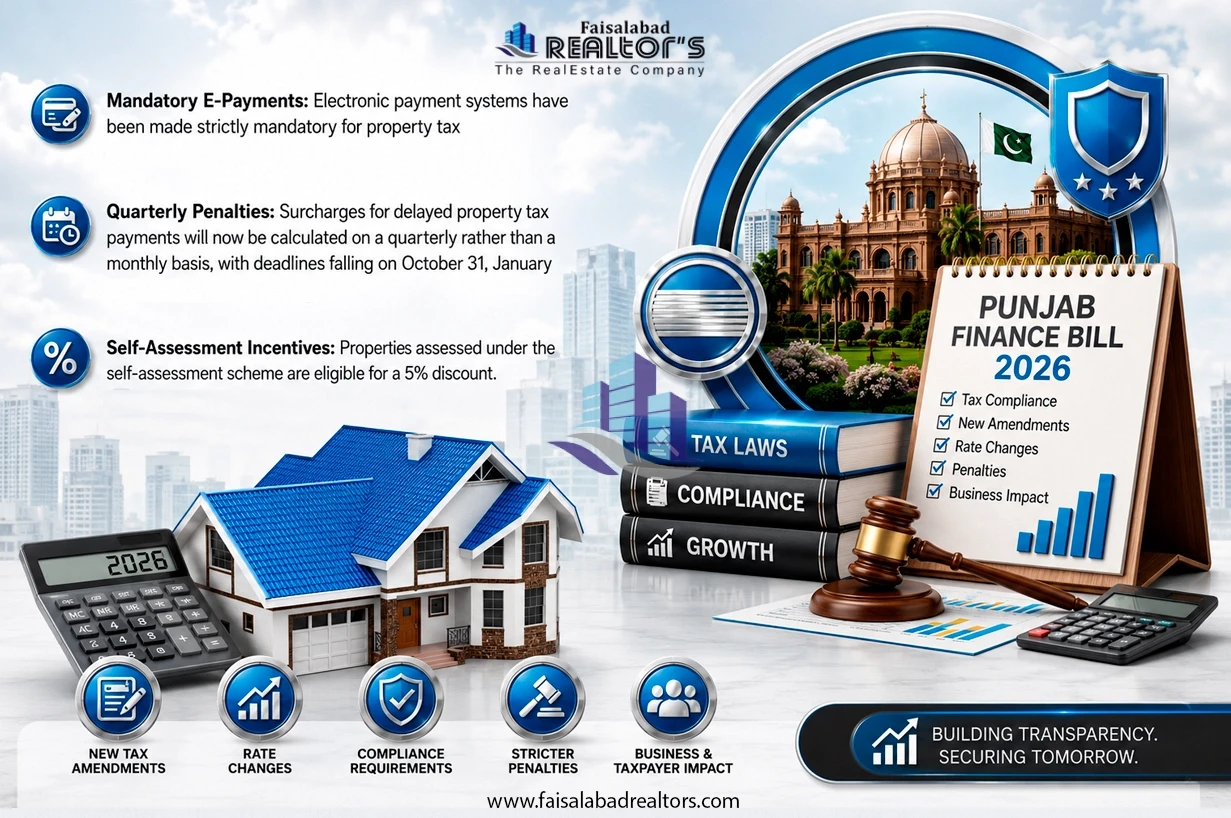
One of the key areas covered in the Punjab Finance Act 2026 is the updated approach to property taxation. The government has proposed making property tax payments more digital and transparent by shifting towards electronic payment systems.
Under the new system, property owners will be required to pay property tax through online channels instead of relying on traditional manual payment methods. The late payment surcharge system has also been revised, replacing monthly calculations with a quarterly mechanism to make the process easier to manage. These Property tax changes are expected to encourage better compliance and reduce administrative issues for property owners.
Punjab GST Changes and Sales Tax Reforms
The Punjab GST changes introduced through the Finance Bill focus on improving tax compliance and strengthening the provincial revenue system. The government has proposed amendments to the Punjab Sales Tax on Services framework, including stricter rules for active taxpayers, improved monitoring systems, and changes in input tax adjustment procedures.
Businesses may also see increased documentation requirements as authorities move toward a more organized and technology-based tax system. These steps are part of broader Punjab tax reforms 2026 aimed at creating a more transparent taxation environment.
Impact on Real Estate Market
The real estate sector is closely linked with taxation policies. Changes in property-related taxes can influence buying, selling, and investment decisions.
The updated measures under the Punjab Finance Bill 2026 may create a mixed impact:
- Digital property tax systems can improve transparency
- Easier payment mechanisms can help property owners
- Better documentation may increase market confidence
- Additional compliance requirements may affect informal transactions
For investors, understanding these reforms will be important before making property decisions.
Vehicle Tax Updates
Apart from property-related measures, the Punjab Budget 2026 also includes revisions in vehicle taxation. The proposed changes include updated token tax rates for higher engine capacity vehicles and increased charges for certain commercial vehicles. Large commercial loaders may face significant increases in token tax compared to previous rates.
At the same time, electric vehicles continue to receive incentives, supporting the transition toward cleaner transportation options.
Digital Compliance and Future Tax System
A major theme behind the Punjab Finance Act 2026 is digital transformation. The government aims to improve tax collection through electronic systems, better monitoring, and stronger compliance measures.
These reforms are designed to:
- Reduce tax leakage
- Improve government revenue
- Make payments easier for citizens
- Create a more documented economy
What the Punjab Finance Bill 2026 Means for Citizens
Opportunities and responsibilities are brought forth by the Punjab Finance Bill 2026. To avoid fines and guarantee compliance, property owners, companies, and car users will need to keep up with the most recent regulations.
These changes could result in a more structured market for the real estate industry where transparent taxation and digital payments are the norm. The government's emphasis on updating the tax system while striking a balance between revenue requirements and public comfort is usually seen in the Punjab Budget 2026.
Conclusion
The proposed Punjab tax rules of 2026 represent a significant change to the tax system in the province. The Punjab Finance Bill 2026 is expected to have an impact on how individuals and companies handle their monetary responsibilities in the upcoming years due to modifications to property tax, GST rules, and digital compliance.
If you're interested in buying or selling a property, do contact us. We provide the best real estate services in Faisalabad.
Contact us for:
House for sale
House for rent
Room for Rent
Flat for Rent
Ideal Farm House
Commercial Avenues