Best Soil for Foundation: Types, Analysis & Tips for Safe House Construction
When you plan to build a house, the first thing that matters is the ground beneath it. Many people focus on bricks, cement and design. But they forget one very important thing, the soil for foundation. The wrong soil can crack your walls. It can sink your floors and damage your entire building over time. So, before any construction begins, understanding the soil is very important. Here we will discuss this topic in detail. So stay tuned with us.
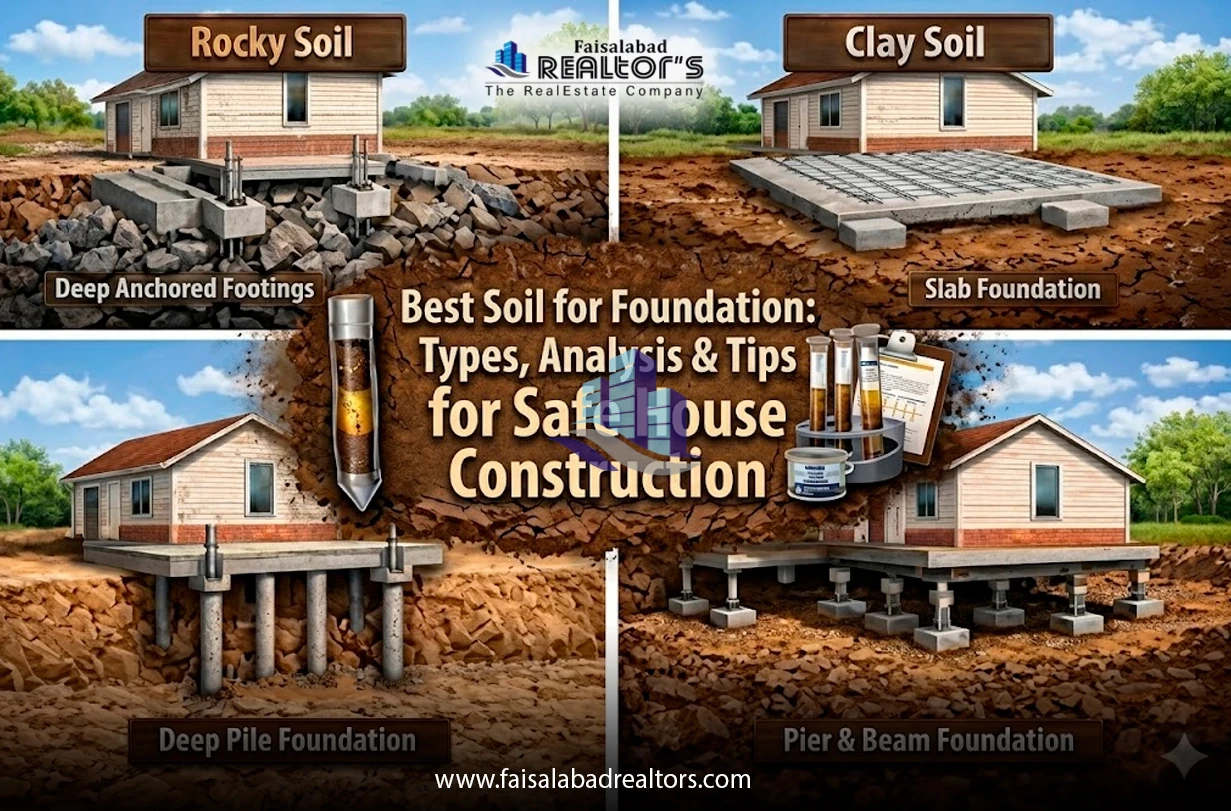
Why Soil Matters in Real Estate Construction
In real estate construction , the soil is not just dirt. It is the base that holds everything above it. A strong building always starts with strong ground. If the soil is unstable, no amount of good construction can save the structure. That is why experts always check the soil before starting a foundation.
Soil Types Overview for Construction
Different plots have different soil types. Each type behaves differently under weight, water, and pressure. Here are the main soil types for construction you should know:
1. Sandy Soil / Gravel
This is one of the best soil for foundation . Sand and gravel have large particles. Water passes through them quickly. They do not hold moisture for long. When compacted properly, sandy soil becomes very firm. It supports heavy loads well. That is why it is widely used in construction projects.
2. Rock / Bedrock
The rocky soil is also excellent for building. It has a very high load-bearing capacity. It does not shift or move easily. Bedrock, sandstone and limestone are all fine examples. The only problem is that you need heavy equipment to dig through them. But once levelled, they make a very solid base.
3. Loam Soil
As we know, loam is a mixture of sand, silt and clay. It has good drainage, and moisture is sufficient. Due to its balanced texture, it is regarded as the ideal soil for building houses.
4. Clay Soil
Clay is very common but also very tricky. It expands when wet and shrinks when dry. This constant movement can crack foundations over time. Clay is not great, but you can work with it if you just dig down far enough until you hit something solid. There is additional caution required when working with clay.
5. Silt
Silt feels smooth and fine. It holds water for a long time. When it gets wet, it swells and puts pressure on the foundation walls.
Like clay, silt is not a great choice. Deeper digging is usually required if the site has silty soil.
Foundation Soil Analysis — Why You Must Do It
Before construction starts, always get a foundation soil analysis done. This is a test carried out by a professional engineer or a construction company. The analysis tells you:
- What type of soil is on your plot
- How much weight the soil can carry
- Whether the soil drains water properly
- If the soil expands or shrinks with moisture changes
- How deep do you need to dig for a stable foundation
Note: If you skip this step, it can cause problems after construction. Always do soil testing as a fix and first step.
Building Foundation Soil Types — A Quick Comparison
Here is a simple comparison of building foundation soil types:
Soil Type | Good for Foundation? | Main Concern |
Gravel / Sand | Yes | None if compacted |
Rock / Bedrock | Yes | Hard to dig |
Loam | Yes | Minimal issues |
Clay | With care | Expands & shrinks |
Silt | Not ideal | Poor drainage |
Tips for Safe House Construction on Any Soil
Here are some simple real estate construction tips to help you build safely:
1. Always test the soil first
Never skip foundation soil analysis. It saves you from expensive repairs later.
2. Dig to the stable layer
If the top soil is clay or silt, dig deeper until you reach firm, stable ground.
3. Compact the soil before pouring concrete
Loose soil must be compacted tightly. This prevents settlement and sinking.
4. Ensure proper drainage
Water is the biggest enemy of any foundation. Make sure water flows away from the base of your building.
5. Hire a professional
Always work with a qualified engineer who understands soil behaviour and local ground conditions.
Conclusion
Choosing the suitable soil for house construction is not something to guess. It is an important step which you select very carefully. Whether you are building a small home or a large commercial property, the soil decides how long it will last. Sandy soil and rock are the safest choices. Loam is also good.
Clay and silt need extra attention and a deep digging process. Most importantly, always get a proper foundation soil analysis done before you begin. It is a small investment that protects your entire building for decades to come.
If you're interested in any property sale or purchase, do contact us. We provide the best real estate services in Faisalabad.
Contact us for:
House for sale
House for rent
Room for Rent
Flat for Rent
Ideal Farm House
Commercial Avenues